


JOYA9 login gives registered users a direct route to their personal profile, casino sections, sports markets and account history. Entering through a verified page, using the correct credentials and reviewing security checks can prevent avoidable access problems. These precautions apply to both mobile and desktop users in Bangladesh.
Why Correct JOYA9 Login Matters
The login screen separates public platform information, such as jaya9 bet markets, from a user’s private account. Registration creates a profile, while login opens an existing one. Confusing the two processes can lead someone to start a duplicate registration when the real issue is an old password or an incorrectly entered phone number.
After authorisation, the account area may provide access to profile details, transaction records, casino categories, sports markets, communication settings and support. The exact menu depends on the current platform version and the user’s account status. Features should be described as available only when they are visible in the live interface.
Correct account entry matters for three reasons. First, it helps the platform show the right balance and history. Second, it keeps personal information behind an authentication step. Third, it creates a clear record of the device or session used to access the account.
An official-looking design is not enough to prove that a login page is genuine. Copied pages can reproduce colours, buttons and logos. Users should reach the account gateway through a known platform route, inspect the full address and avoid forms received in unexpected messages.
Safe login habits include:
- using a unique password that is not shared with email or banking;
- checking the full page address before entering credentials;
- avoiding open public Wi-Fi for account access;
- keeping the registered phone number and email current;
- refusing requests to send a password or one-time code to another person;
- signing out completely on any shared or borrowed device.
Bangladesh users should also confirm age, location and legal eligibility before using gambling-related sections. Access to a login form does not establish that every service is permitted in the user’s location.
Checklist Before Opening the Account Login Page
A short preparation check saves time when a form does not accept the first attempt. Most account-entry problems come from the wrong identifier, outdated autofill, an unstable connection or an unverified page.
| Item to Prepare | What to Check | Why It Helps |
| Registered identifier | Email, mobile number or username used at registration | Prevents attempts with a different account detail |
| Password | Current version and correct keyboard language | Avoids old autofill and typing errors |
| Recovery access | Registered SIM or email inbox is available | Allows a code or reset link to be received |
| Connection | Private Wi-Fi or reliable mobile data | Reduces page-loading and security problems |
| Device software | Browser, operating system and official app are current | Limits compatibility errors |
| Page source | Address and platform route are verified | Reduces phishing risk |
| Time and privacy | No one can see the screen or interrupt the process | Helps prevent rushed mistakes |
Bangladesh mobile numbers may appear with the +880 country code or in a local format, depending on the form. Users should follow the example shown in the current field rather than trying several versions repeatedly. A leading zero may need different treatment when the international code is used.
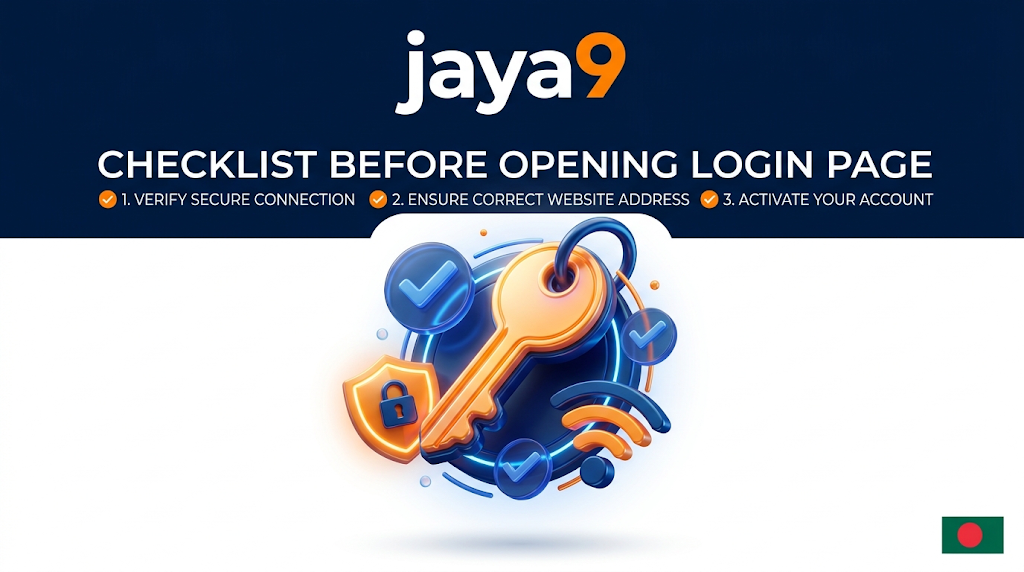
Before entry, close any copied page opened from an advertisement and begin again through the known platform navigation. A saved bookmark is convenient, but it should still be checked because old links can redirect or become outdated.
Use this final pre-login routine:
- confirm the device is private or trusted;
- connect through a secure network;
- open the known account gateway;
- compare the page design and address with the main platform;
- prepare the registered identifier and current password;
- keep the recovery phone or inbox available;
- disable screen sharing before entering sensitive data.
If any element looks different from the expected form, stop before typing. It is safer to verify the route than to change a correct password because an imitation page rejected it.
Detailed JOYA9 Login Instructions
Existing users should enter the account associated with their original registration. A new user must complete registration first, accept the current terms and provide accurate information. Creating another profile is not an appropriate fix for forgotten credentials.
For an existing account:
- open the official browser page or approved application;
- choose Login, Sign In or the current equivalent;
- enter the registered email, phone number or username;
- type the password manually if autofill may be outdated;
- review both fields for spaces and typing errors;
- select the confirmation button once;
- complete an additional security check if requested;
- wait for the account dashboard to load;
- confirm that the displayed name and history are correct.
A first login from a new phone or computer may trigger extra verification. This is not automatically a problem. A one-time code should be entered only into the trusted page that requested it. No support agent, friend or account helper needs to know that code.
If the details are rejected, read the exact message instead of rapidly submitting the form again. Check Caps Lock, keyboard language, spaces and the number format. A password manager may still be filling an older password after a recent reset.
New users should use the registration option rather than the login form. They need to review the age and location conditions, create a strong password and confirm the contact method connected with recovery. After registration, they should return to the normal account gateway rather than following a promotional link.
Once the dashboard opens, review profile and security information before entering another section. An incorrect name, unknown balance or unfamiliar transaction can indicate that the wrong account loaded or that further security action is needed.
Choosing Between App Login and Browser Login
Browser and application access can lead to the same account, but the practical experience differs. A browser requires no installation and is useful for occasional entry. An application can provide a direct home-screen shortcut and a layout designed for touch controls.
The browser route is often easier when a phone has limited storage or when the official application is not offered for that device. It also avoids installing an Android package. The trade-off is that the user must verify the page address and browser session each time.
The jaya9 app can feel faster for regular mobile use.. It should be installed only through the current approved source. An unknown APK or copied store listing can collect credentials even when its first screen closely resembles the real platform.
Neither method is automatically safer in every situation. A verified application on a locked personal phone may be preferable to a shared browser. A current browser on a trusted computer may be safer than an application obtained from an unofficial file directory.
Choose based on:
- whether the device is personal or shared;
- available storage and operating-system compatibility;
- the reliability of the official installation route;
- the need for a larger desktop interface;
- access to a stable private connection;
- the user’s ability to sign out and protect the device.
The account password should remain the same secure credential across approved access methods unless the platform explicitly requires otherwise. A separate page claiming that it needs a special casino or sports password should be treated cautiously.
Desktop and Mobile Login Comparison
The main differences concern screen size, network behaviour and device security. The following comparison helps users choose an appropriate route without assuming that one format contains more account privileges.
| Factor | Mobile Phone | Desktop or Laptop |
| Entry speed | Quick from an app icon or saved mobile page | Quick from a trusted bookmark |
| Screen space | Compact form designed for taps | Larger view of fields and account tools |
| Connection | May switch between mobile data and Wi-Fi | Often remains on one fixed network |
| Common risk | Lost phone, unsafe APK or visible notifications | Shared browser, extensions or saved passwords |
| Useful protection | Screen lock, biometrics and hidden previews | Private user profile and complete sign-out |
| Updates | Keep the app, browser and system current | Keep the browser and operating system current |
| Shared use | Avoid saving credentials | Use private mode and never save the password |
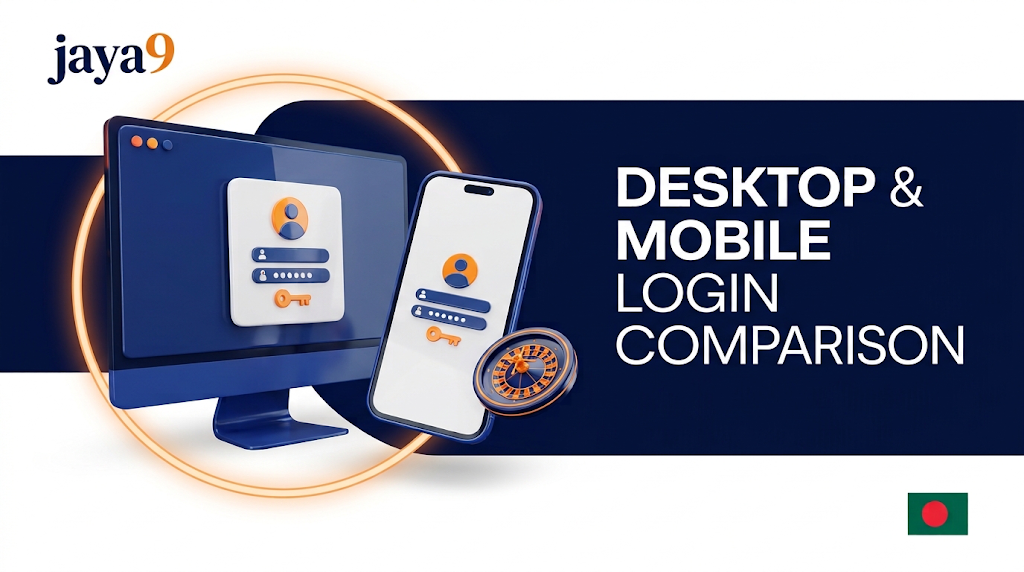
On mobile, predictive text and small fields can introduce errors. Expanding the password field is not always possible, so a password manager can help on a personal device. The manager itself should be protected with a strong master password or biometric control.
On desktop, users should pay attention to extensions and browser profiles. An unknown extension can view page content, while a shared profile may sync saved credentials. Incognito or private mode reduces local history but does not make an unsafe network or fraudulent page secure.
Switching devices can trigger a security check because the account sees a new browser, network or system. Keep access to the registered phone or email before travelling or replacing a device.
What to Do If You Forget the Login Password
Password recovery should begin from the normal account-entry page. Do not use a reset form sent by an unsolicited contact. Select Forgot Password or the current equivalent and provide the identifier linked to the account.
The recovery process usually follows these stages:
- open the verified login page;
- select the password-recovery option;
- enter the registered email, number or username;
- check the registered inbox or phone;
- use the newest code or reset link received;
- create a new unique password;
- return to the normal login form;
- test the new password once;
- update the saved password-manager entry.
If the message does not arrive, wait briefly and check mobile signal, the spam folder and the number format. Repeated requests can invalidate earlier codes, so only the newest one should be used.
A recovery code is temporary and private. It should never be posted in a support chat, comment or screenshot. Someone who obtains it may be able to reset the account password even without knowing the old one.
When the registered phone number or email is no longer available, contact authorised support through a verified platform channel. Be prepared to follow the current identity-check process. Provide only the information requested within that process and never reveal the existing password.
After recovery, review recent sign-ins, contact details and transaction history. End unfamiliar sessions if that control is available. The email account connected with recovery should also be secured because access to the inbox can make another reset possible.
Password Recommendations for Better Security
A good password is long, unique and unrelated to information that another person can discover. Names, birthdays, phone numbers, addresses and simple sequences are weak choices, particularly when they appear on social media.
Build a stronger credential by:
- using several unrelated words or a generated random string;
- choosing more than the minimum accepted length;
- including different character types when permitted;
- avoiding brand names and predictable substitutions;
- keeping it different from email, banking and social accounts;
- storing it in a reputable password manager;
- changing it immediately after possible exposure.
A long passphrase can be easier to remember than a short collection of symbols. It still needs to be unique. Replacing “a” with “@” in a common word or adding “123” does not create strong protection.
Do not save credentials in an unlocked notes application, chat or spreadsheet. A password manager can fill the correct account entry without exposing the password on screen. On a shared device, saving should be declined completely.
Frequent scheduled changes are less useful than changing the password for a clear reason. Reset it after suspicious activity, accidental sharing, use on an untrusted device or a warning that the credential may have been exposed.
Where an additional verification method is currently offered, it can provide another layer of protection. Recovery details must remain current, otherwise the user may have difficulty completing a legitimate security check.
How Suspicious Login Attempts May Be Detected
Account systems may react to unusual activity such as repeated failed passwords, a new device, a different region or a sudden change in connection. The exact security controls should be confirmed in current Jaya9 casino documentation rather than assumed.
A user may notice:
- an extra verification prompt;
- a one-time code sent to the registered contact;
- a notice about an unfamiliar device;
- a temporary pause after repeated failures;
- a request to confirm account details;
- an alert about changed security information.
Not every additional check means the account is under attack. A new phone, updated browser, mobile network change or travel can also trigger review. Read the notice carefully and complete only the steps shown through the trusted interface.
Unexpected verification messages require caution. If a code arrives when the user is not trying to sign in, someone may have entered the account identifier. Do not share the code. Open the platform separately, change the password and inspect account activity.
Security also depends on user behaviour. A platform cannot protect a password typed into a copied page or forwarded to another person. Page verification, unique credentials and private recovery codes remain essential.
Common Problems During the Login Process
An incorrect password is only one possible cause of failure. Outdated browser data, weak connectivity, an old application build or a temporary service problem can produce similar symptoms.
| Problem | Possible Cause | First Safe Action |
| Credentials are rejected | Typo, old autofill or wrong identifier | Retype both fields carefully |
| Code does not arrive | Weak signal, spam filtering or outdated contact | Check signal, inbox folders and number format |
| Page keeps refreshing | Corrupted cache, blocked cookies or unstable network | Open a fresh private session |
| Application does not open | Old version, low storage or device conflict | Check the approved update source |
| Account is temporarily locked | Too many failed attempts | Stop retrying and follow the official notice |
| Blank screen appears | Browser conflict or temporary service issue | Try a current supported browser |
| Unknown login alert | New device or possible unauthorised attempt | Secure the account and review history |
If the browser works but the application does not, the credentials are probably not the main issue. Check the application version, available storage and connection before resetting the password.
If one browser fails, another current browser can help identify a local compatibility problem. Do not install an unknown browser extension or disable all security controls simply to open the page.
A lock after repeated attempts is intended to slow unauthorised access. Continuing to submit the same details can extend the problem. Follow the displayed waiting period or recovery route, then make one careful attempt.
Solutions for JOYA9 Access Difficulties
Troubleshooting works best in a fixed order. Changing the password, browser, network and application at the same time makes it difficult to identify the cause.
Use this sequence:
- write down the exact error message;
- confirm that the connection is stable;
- verify the page or application source;
- check the registered identifier and number format;
- retype the current password once;
- close and reopen the browser or application;
- clear temporary cache data if needed;
- check for an approved update;
- use recovery when the password is no longer known;
- contact verified support if access is still unavailable.
Clearing cache and clearing all application storage are different. Cache removal usually deletes temporary files. Clearing all storage may sign the user out and remove local settings, so recovery access should be confirmed first.
When contacting support, include the device model, operating-system version, browser or application version, time of the problem and exact error. Never include the password, bank PIN or one-time verification code.
If the account opens but information looks unfamiliar, stop before making a transaction. Change the password through the verified settings, end unknown sessions and contact support with the relevant time and activity details.